The Future of the Internet
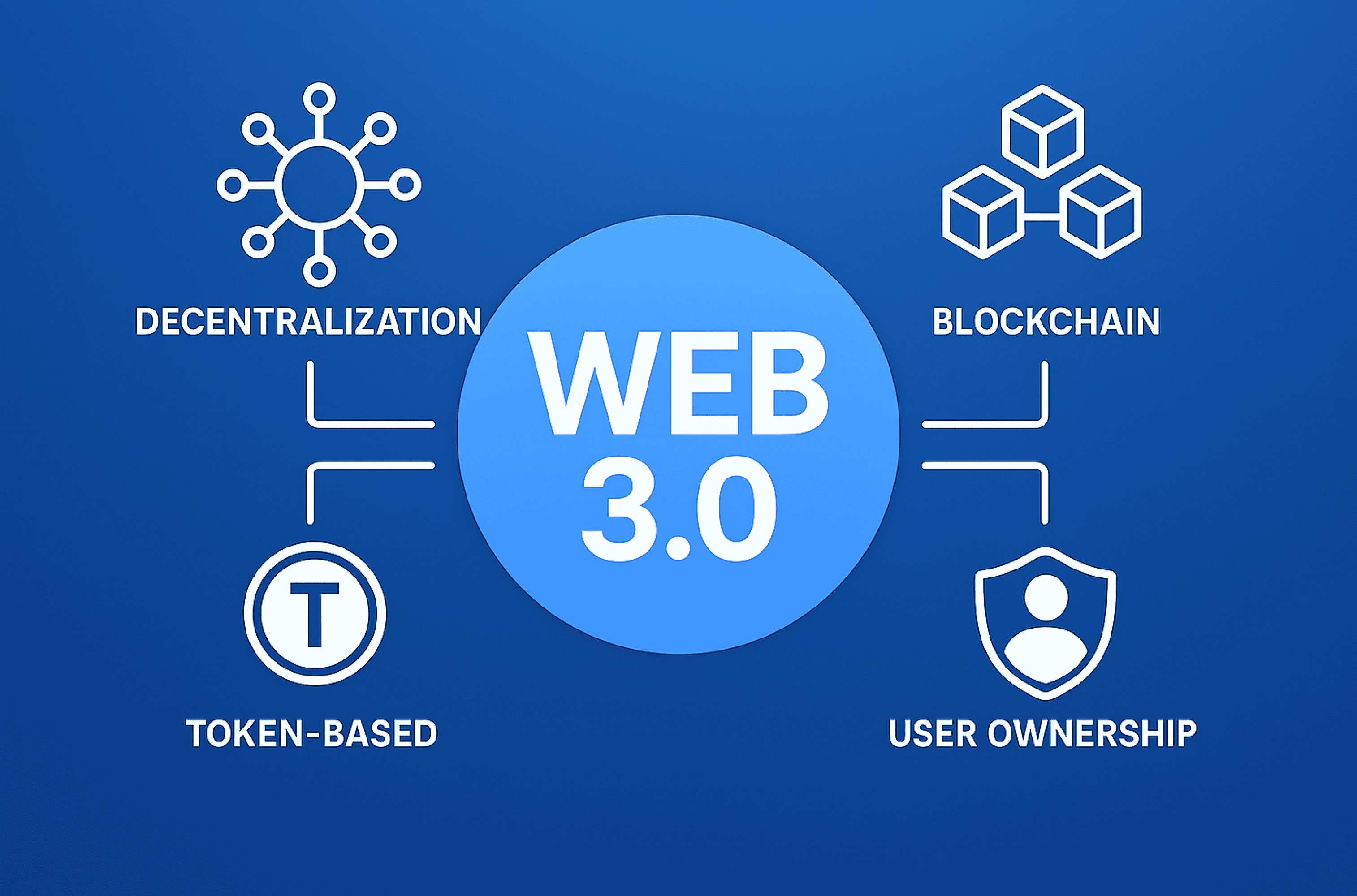
The internet has come a long way — from static web pages to social media-driven platforms. Now, we are entering the next phase: Web 3.0, also known as the decentralized web. But what exactly is Web 3.0, and why does it matter?
A Quick Look at Web Evolution
Web 1.0
1990s – early 2000s
Read-only websites, minimal user interaction
Web 2.0
2000s – present
Social media, user-generated content, centralized platforms
Web 3.0
2020s – future
Decentralized apps, user ownership, blockchain, AI
What is Web 3.0?
Web 3.0 is the next generation of the internet that focuses on:
Decentralization: No single company controls your data. It’s stored on blockchain networks.
User Ownership: You own your identity, digital assets (like NFTs), and personal data.
Smart Contracts: Code that automatically runs agreements without needing trust or middlemen.
Cryptocurrency & Tokens: Users are rewarded for participation through tokens (e.g., in play-to-earn games or DAOs).
AI & Personalization: The web becomes smarter, offering more personalized experiences.
Interoperability: Apps can connect across different blockchains or platforms.
Real-Life Examples of Web 3.0
Ethereum & dApps: Apps like Uniswap, OpenSea, and Lens Protocol are all built on Web 3.0 principles.
NFTs: Digital art and collectibles that give creators direct control and ownership.
DAOs: Decentralized Autonomous Organizations where communities make decisions together.
Why Should You Care?
Web 3.0 is not just for techies. It’s about:
Taking back control from big tech companies.
Having more secure and transparent systems.
Opening up new economic opportunities for creators, gamers, and everyday users.
Final Thoughts
Web 3.0 is still evolving — just like the early days of the internet. But one thing is clear: it promises a more open, user-owned, and intelligent digital world. Whether you're a developer, artist, or everyday user, it's worth paying attention to where this new web is headed.